Design and trends
Shaker vs Slab Kitchen Doors: A Specifier's Guide
Key points
- Shaker doors have a frame and recessed centre panel; slab doors are a single flat panel.
- Shaker reads as classic and suits most homes; slab reads as modern and suits handleless and compact kitchens.
- Slab is usually cheaper to make and easier to clean; shaker hides minor knocks and wear better.
- In UAE apartments, gloss and matt slab dominate; in villas, shaker and raised panel are often chosen for the show kitchen.
Ask a room of kitchen buyers to describe their ideal door and most will describe one of two styles: a shaker, with its square frame and recessed panel, or a slab, a single flat surface. Between them they account for the large majority of kitchens specified across UAE apartments and villas. Choosing well between them affects cost, durability and how quickly a home sells or lets.
What defines each style
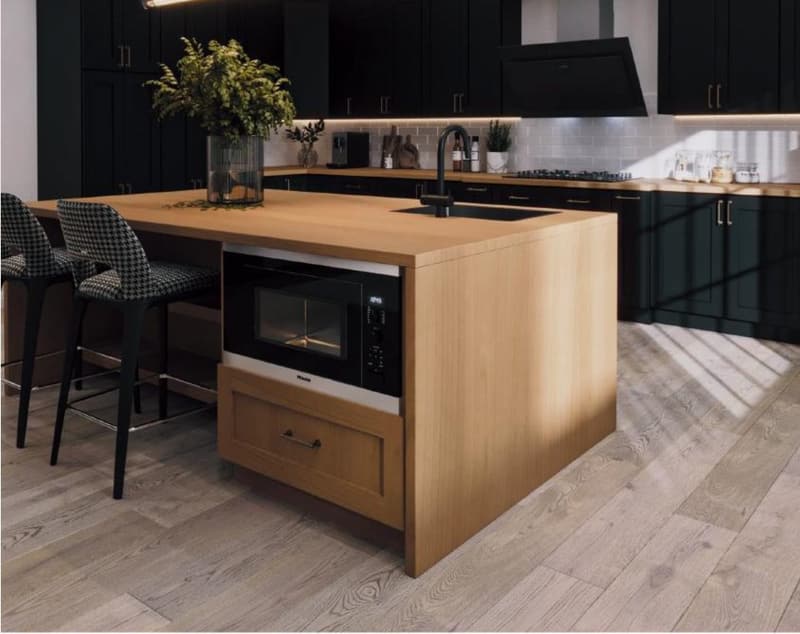
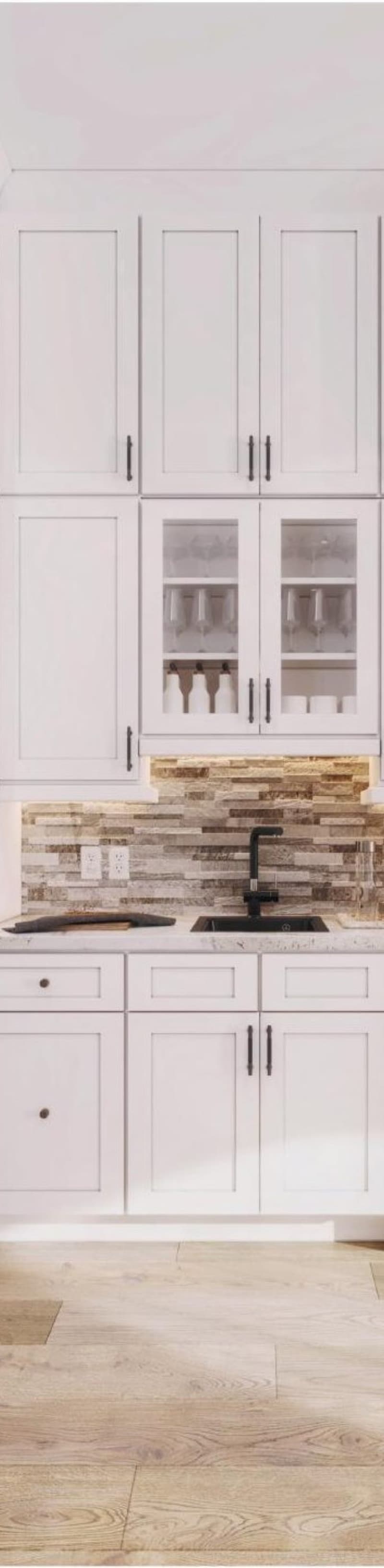
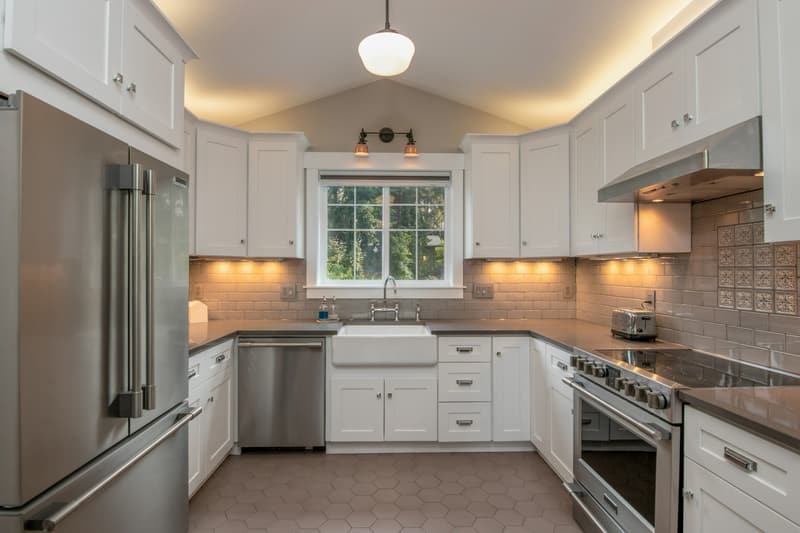
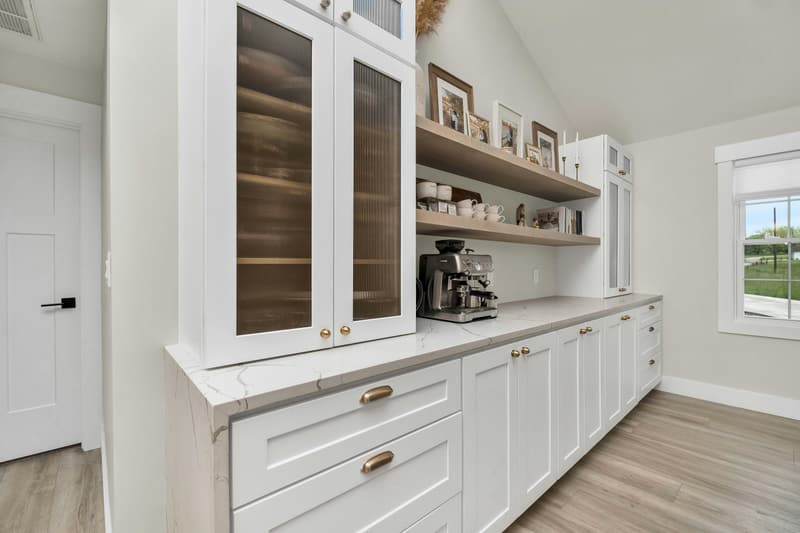
A shaker door has four frame pieces (two stiles and two rails) around a flat centre panel. The style comes from 19th-century American furniture makers and has survived because it is simple, well proportioned and sits comfortably in almost any home. Variations include a narrow-rail or slim shaker, a double-step shaker with a second inner frame, and shakers with a fine detail line.
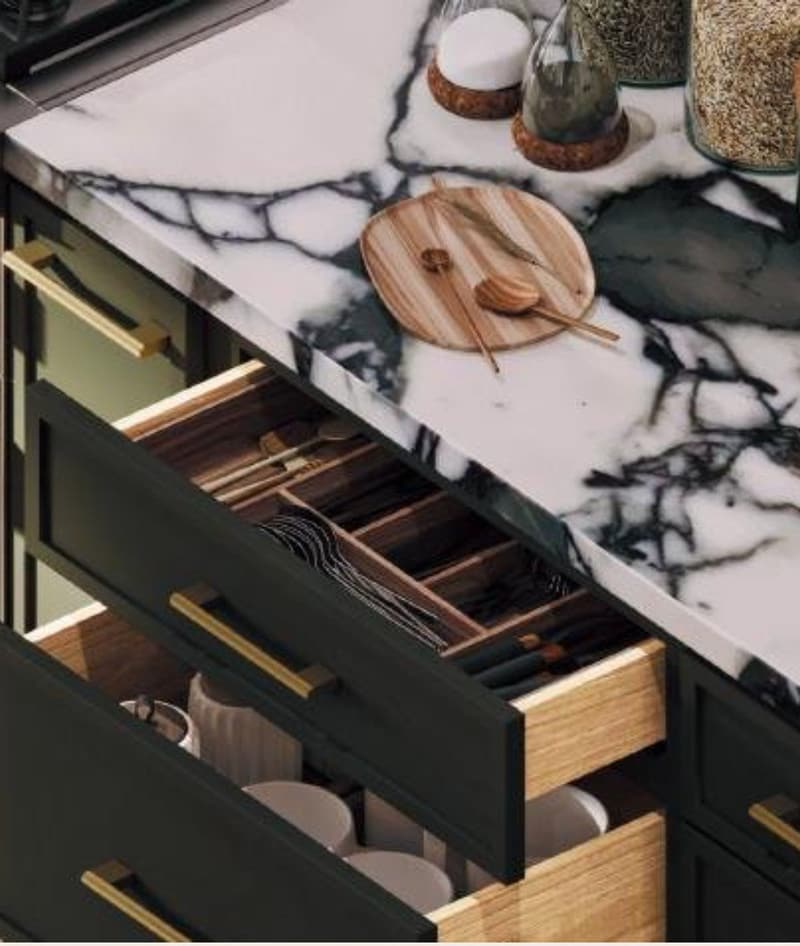
A slab door, sometimes called flat-panel, is one piece with no frame. It is the basis of European and contemporary kitchens, and is the natural partner for handleless rails, J-pulls and push-to-open hardware.
How they compare
| Shaker | Slab | |
|---|---|---|
| Look | Classic, transitional | Modern, minimal |
| Best in | Family homes, period and country schemes | Apartments, compact and handleless kitchens |
| Cost | Higher (more parts and machining) | Lower |
| Cleaning | Panel edges collect dust | Wipe in one stroke |
| Hides wear | Well | Gloss shows marks; matt and woodgrain hide them |
| Handle choice | Bars, knobs, cup pulls | Rails, J-pull, edge pulls or push-to-open |
Materials change the answer
Style and material are separate choices. A shaker can be five-piece solid wood (our Meridian and Halcyon collections), or vinyl-wrapped MDF that gives the painted look at a lower cost (Spectrum). A slab can be super-matt melamine (Dusk), high-gloss acrylic (Lustre) or synchronised-grain oak effect (Dapple). The material decides durability and price as much as the style does.
Choosing by project type
- Apartments and studios: high-gloss or super-matt slab. Gloss reflects light and makes compact kitchens feel larger; matt resists fingerprints.
- Villas, show kitchen: shaker, raised panel or a furniture-style oak slab, often with a feature island.
- Villas, working kitchen: a practical slab or simple shaker in a durable finish.
- Serviced apartments and hospitality: slab in a hard-wearing finish, with handleless rails to avoid snagging.
The two-tone compromise
Many of the best-selling kitchens now combine both: shaker base units in a deeper colour with slab or glazed wall units, or a shaker run with a slab island. Because our cabinet collections and signature ranges share the same modular sizes, mixing them in one kitchen is straightforward.
See them side by side. Browse all 16 collections or open the colour finder to compare 119 colours across shaker and slab doors.
Frequently asked questions
Is shaker or slab more expensive?
Shaker is usually more expensive because each door has five parts and more machining. Vinyl-wrapped MDF shakers narrow the gap.
Are shaker kitchens going out of fashion?
Shaker has been continuously popular for decades because its proportions suit most homes. Colours and handles change with trends; the profile endures.
Which kitchen door is easiest to clean?
A matt or woodgrain slab, because there are no frame edges to collect dust and the surface hides fingerprints.
About the author. Written by Sanyang's design and technical team, drawing on more than 25 years of manufacturing kitchen and bathroom cabinetry and more than 500 containers a month shipped to the United States. About Sanyang.